
For many Canadian businesses — whether in healthcare, retail, or automotive—the phone system is mission-critical. Every missed call is a missed opportunity. Every interruption impacts revenue and customer trust.
So the question is simple: How do you modernize your communication system without disrupting operations? The answer is not just technology. It’s strategy.
Why Businesses Are Migrating to Cloud Phone Systems
Traditional PBX systems are becoming a bottleneck. They are expensive to maintain, difficult to scale, and not designed for hybrid work. Cloud communication systems solve this. With a Cloud Phone System (VoIP), your teams can:
- Work from anywhere
- Centralize communications (calls, SMS, collaboration)
- Reduce infrastructure costs
- Improve customer experience
According to the Forrester Total Economic Impact study on Cisco Webex, companies can achieve up to 304% ROI over three years.
But migration is where most businesses hesitate.
The Real Risk: Downtime
Downtime doesn’t just mean phones are offline. It means:
- Lost sales
- Frustrated customers
- Overloaded support teams
That’s why a zero-disruption migration strategy is critical.
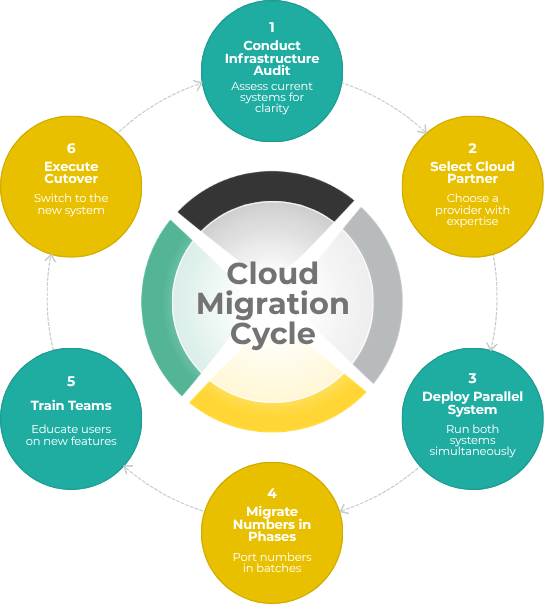
Step-by-Step: How to Migrate Without Interrupting Service
1. Start With a Full Infrastructure Audit
Before moving anything, you need clarity:
- Current phone system setup
- Internet bandwidth and redundancy
- Call volumes and peak usage
- Integrations (CRM, Teams, Webex, etc.)
This ensures the cloud solution is properly designed—not improvised.
2. Choose the Right Cloud Partner
Not all providers are equal. You need a partner who can:
- Design a migration plan
- Handle number porting
- Provide local Canadian compliance
- Offer 24/7 support
Voysis delivers its solutions through the VoysisOne platform, combining engineering expertise with Cisco-powered infrastructure.
3. Deploy a Parallel System (Critical Step)
This is where downtime is avoided. Instead of switching overnight, you:
- Run your existing system and the new cloud system simultaneously
- Test internally with selected teams
- Validate call quality, routing, and integrations
No risk. No interruption.
4. Migrate Numbers in Phases
Number porting is often the most sensitive step.
Best practice:
- Port numbers in batches (departments or locations)
- Maintain call forwarding during transition
- Validate each group before moving to the next
This ensures continuity at every stage.
5. Train Teams Before the Switch
Technology doesn’t fail. Adoption does. Train your teams on:
- New call flows
- Softphones and mobile apps
- Features like SMS and collaboration
This reduces friction and accelerates ROI.
6. Execute a Controlled Cutover
Once everything is validated:
- Finalize number porting
- Redirect call flows
- Monitor performance in real time
With the right setup, users won’t even notice the transition.
Why Canadian Businesses Trust Voysis
- 18+ years of expertise
- 500+ clients globally
- 94% customer satisfaction
- Premier Cisco Partner
- Nationwide and global coverage
Voysis simplifies complex migrations through a structured, proven approach.
Expert Insight
“As companies move to the cloud, the biggest mistake is trying to rush the transition. A phased, well-planned migration eliminates risk and ensures immediate business value.”
— Joseph Silla, Director of Sales
Beyond Migration: Unlocking Full Value
Once in the cloud, your system becomes more than just telephony.
You can integrate:
- Contact Center capabilities
- Call Center tools
- Cloud Phone System (VoIP)
- Business SMS
- AI Virtual Agents
This is where real ROI happens.